

Exhausted by Design
Resting for resistance in a system built to burn us out.

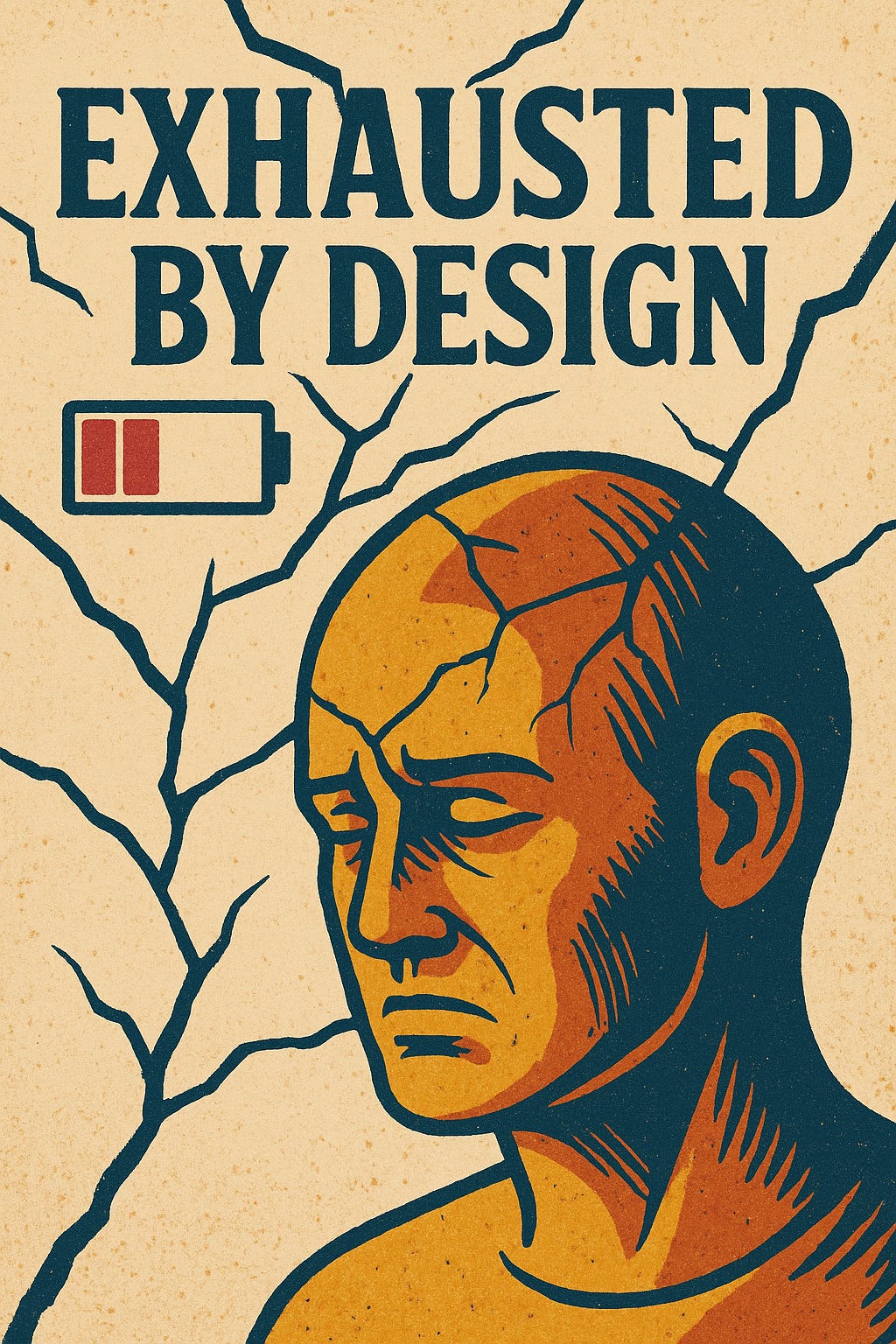
We are not tired by accident. The exhaustion we feel — from relentless news cycles, overwork, endless crises, and the constant pull of survival — is not a glitch in the system. It’s the system working exactly as intended.
If we are too busy working two jobs, too anxious about debt, too distracted by endless executive orders and scandals, too overwhelmed to process the flood of information — then we are too drained to resist. Exhaustion itself becomes a weapon of control.
And yet, life keeps demanding that we show up: pay bills, make dinner, attend meetings, keep scrolling. The tension between living and resisting can feel unbearable — like to choose one is to betray the other.
But what if living and resisting could co-exist?
This essay is not a permission slip to “check out.” It’s not an endorsement of burying our heads in the sand while others suffer. Instead, it’s an invitation to rethink rest as part of resistance, rather than its opposite.
Rest as Resilience
Authoritarian systems thrive on exhaustion. They rely on people becoming so depleted that they stop showing up, stop paying attention, stop believing change is possible.
This isn’t just metaphor. Think about the flurry of executive orders, policy shifts, crises, and scandals all at once — flooding the news, social media, our inboxes. It’s a blitz that overloads our brains. When everything demands attention, nothing truly gets attention. We become reactive rather than deliberate. We either snap or shut down. That overwhelm becomes another tool of power: it shapes what we can see, what we can care about, and often, what we fear enough to fight.
Audre Lorde reminded us:
“Caring for myself is not self-indulgence, it is self-preservation, and that is an act of political warfare.”
Rest for resilience looks like creating space to reconnect with what’s worth fighting for. It’s not about wellness clichés. It’s about grounding practices that help you remember who you are and why you care: cooking and eating with loved ones, sharing laughter and joy, reading or creating art that reflects your values, or protecting solitude to process grief.
I know this because I’ve lived the opposite. When I care deeply about an issue, I throw myself in completely — reading, sharing, debating, scrolling, thinking about it all hours of the day. And then I hit a boiling point. It’s not a graceful pause; it’s a total shutdown, like my system refuses to take in even one more headline or thread. Instead of steady, intentional engagement, I end up withdrawing entirely for weeks just to recharge.
It feels like a sports injury: you ignore the strain, push through, and keep training at full intensity until something snaps. Then, instead of taking a short rest, you’re out of the game for months. That’s what burnout does to resistance. Without pacing, the backfire is worse than if you’d allowed yourself small, steady moments of recovery all along.
I’ve learned that resilience-based rest for me often looks ordinary, even simple: spending unhurried time with loved ones, revisiting activities I enjoy, or letting myself watch a show without guilt. Because so much of my activism is intellectual — reading, writing, absorbing news, analyzing — it helps me to balance that with physical grounding. I’ll build something with my hands, mow the lawn, go outside, or push myself through a workout. These aren’t “escapes.” They’re ways of reconnecting to my body, my relationships, and my joy — the things that remind me what’s worth fighting for.
Rest as a Shield
But there’s another kind of rest — what many in spiritual and wellness spaces call spiritual bypassing. This is when “rest” becomes avoidance:
Refusing to follow the news because it’s “too negative.”
Explaining away injustice with phrases like “everything happens for a reason.”
Using wellness language — “protecting my energy” — as an excuse to never engage.
This is not rest for resistance. This is rest as a shield — a way of insulating privilege from discomfort while others live in unrelenting crisis. It masquerades as self-care but functions as disengagement.
The difference isn’t always obvious in the moment. Which is why the question I keep returning to is simple:
Am I resting for resilience, or am I bypassing for comfort?
The Line Between
This isn’t about perfection. We will all get it wrong sometimes. What matters is cultivating awareness of the line:
Resilience-based rest refuels you so you can step back in.
Shield-based rest excuses you from ever stepping back in.
Angela Davis once said: “Radical simply means ‘grasping things at the root.’” When rest means renewing your root — your reason for resisting, your connections to others, your values — it becomes radical rather than reactionary.
Rest as Collective Practice
Finally, rest for resistance should not fall on individuals alone. Communities can build cultures where rest is shared:
Rotating responsibilities so no one burns out.
Hosting spaces for joy, grief, or play alongside organizing.
Normalizing cycles of action and retreat, rather than expecting constant availability.
When rest is collective, it becomes less about guilt and more about rhythm — a way of ensuring movements don’t collapse under the weight of exhaustion.
Final Thoughts
Resting for resistance means refusing to let exhaustion become the system’s greatest weapon. It is not about denial. It is not about privilege as escape. It is about pacing ourselves for the long haul, grounding in what makes us human, and returning — again and again — to the fight.
Because the truth is this: the struggle doesn’t need martyrs who burn out. It needs communities that can endure. And that endurance will only come if we learn how to rest not as retreat, but as resistance.
👏🏻❤️